
Approaching The End: Face-To-Screen With The World’s First Humanless Opera
The crowd is getting impatient. An eclectic mass of humanity presses up against the Théatre du Châtelet’s glass-fronted façade like extras in a zombie film. Across the Seine lies the Isle de la Cité, the floodlit Gothic towers of Notre Dame clearly visible. I am the only one who looks in this direction. Contemplating the night before, my first few hours in Paris.
Hatsune Miku awaits her audience inside as the doors open. Bulky security staff search bags and guide the Miku-hungry horde into the Châtelet’s lobby. A programme seller advertises his fashionably-bound paper products next to a Miku mannequin decked in a custom-designed Louis Vuitton dress and her signature twin teal pigtails, sculpted here as if she were stood before a professional-grade fan on a magazine cover shoot. The programme seller is ignored as the Miku mannequin fills dozens of smartphone screens, each one frenetically blinking as its operator strives to capture the perfect memory.
I make my way to the merch stand, considering a twenty-euro CD and an eye-catching t-shirt and thinking about the level of diversity present here. I’m at a concert starring a Japanese pop star who technically doesn’t exist, and yet there are relatively few examples of the socially inept über-geeks one might expect from such a billing. A good number of the people around me are arty types, clad in designer clothing and affecting haughty airs; others fit the bill of alternative music fans, skinny jeans and trendy t-shirts, while another portion is made up of female pop fans, predominantly Japanese, excitedly squealing and taking selfies on the stairs.
A mutually confusing encounter with a cloakroom assistant and an exchange of apologies later, I am ushered to my front-row-centre seat. I take in the wide semi-circles of the multi-tiered balconies and the imposing curtain, adorned with a disturbing expanse of faded imagery simultaneously suggesting contemporary surrealism and barbaric medieval torture scenes.
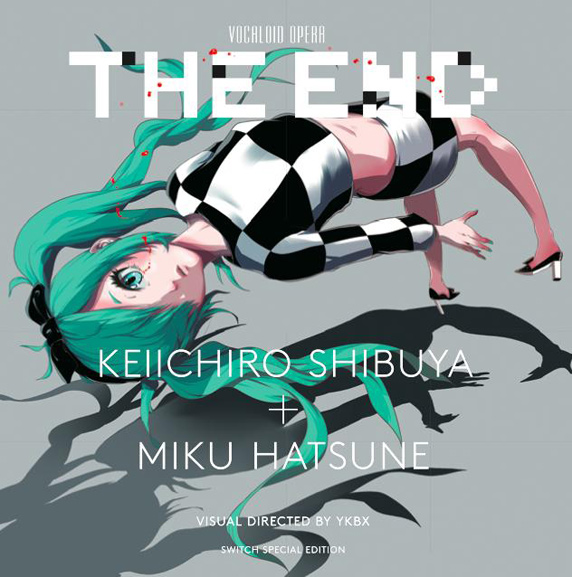
Behind this curtain, we are told, the performance is now ready to start. Voices in three languages ask us to take our seats. The demonic curtain finally rises, revealing a plain black expanse. The second curtain is lifted. This is the beginning of The End.
Hatsune Miku is not like other pop stars. Whereas Beyoncé, Katy Perry, Miley Cyrus, and Justin Bieber had to be born, trained, discovered, and tweaked by image consultants, Hatsune Miku is coming the other way.
This is possible because she is not human. Hatsune Miku is both real and unreal. She exists as a concept, an idea. She exists in terms of digital information, the neural firings of those who discover and worship her, and in the beams of light projected onto screens during her live concerts. But this has not stopped her from attracting a legion of followers who treat her as if she were in fact made of flesh and blood, like you and me.
In short, Miku is a meme taken to a whole new level. Read more…
 Welcome to Part Two of The Musical Melting Pot’s Guide To Project RnL! Click
  For as long as Quinn could remember, the window had been there. The world around it was chaotic, turbulent, constantly changing; but through it all, the window remained.